
Beyond Training: Ensuring the Livelihood Sustainability of Pashu Sakhis
- TGT GLOBAL Development services
- Oct 7, 2025
- 3 min read

In India’s rural livestock ecosystem, Pashu Sakhis—community-based last mile door step animal health workers, often women from self-help groups—have emerged as a bridge between formal veterinary systems and underserved livestock-owning households. Their role in providing doorstep animal health services, vaccination support, deworming, first-aid, feed advisory and farmer awareness is now well recognized.
However, as programs and donors celebrate their growing numbers and field outreach, a critical question remains under-addressed: How can Pashu Sakhis transition from being trained volunteers to sustainable rural service providers? This article explores the pathways and challenges to ensure their long-term livelihood sustainability.
Who Are Pashu Sakhis?
“Pashu Sakhi” literally means “Friend of the Animal.” These women are trained through short-term or modular capacity-building programs to deliver basic animal health and livestock extension services in their communities.
They are often selected from SHGs (Self Help Groups) and operate in marginalized areas where veterinary access is very limited. However, many Pashu Sakhis work without a structured income, relying on small service fees and time limited project-based incentives, making their role precarious and unsustainable in the long run.
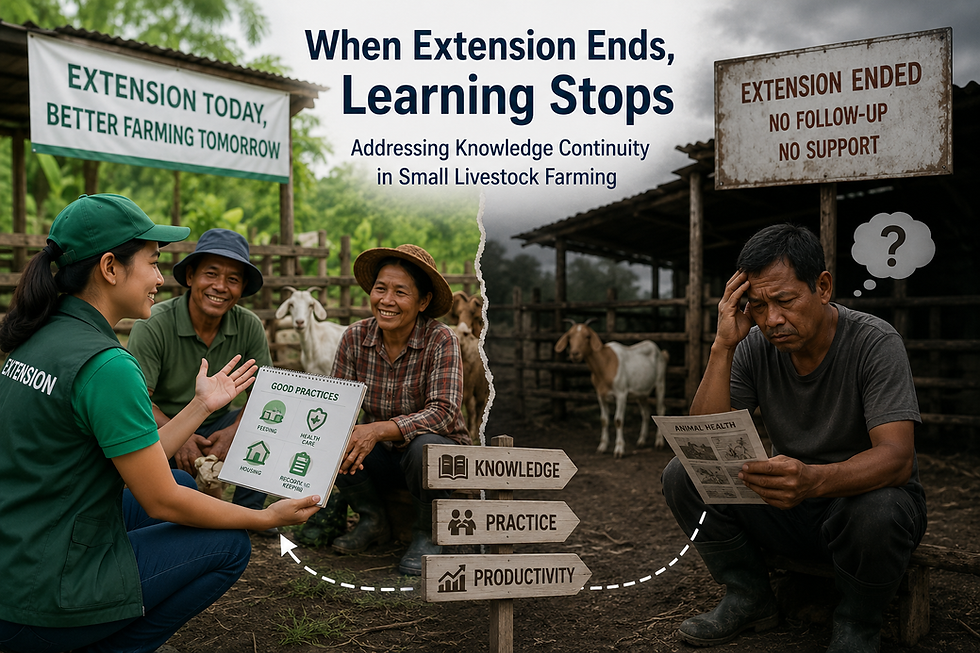
The Livelihood Challenge: While training programs build technical skills, they often fall short of addressing financial, institutional and social factors that influence the retention and motivation of Pashu Sakhis. Key livelihood sustainability challenges include:
Irregular income due to informal payments for the multiple kind of services
Lack of access to veterinary supplies and credit for micro-enterprises
Poor linkage with formal animal husbandry departments or private players
No career progression pathway or certification recognition
Workload imbalance between domestic responsibilities and field services
Without addressing these challenges, trained Pashu Sakhis becoming underutilized or eventually dropping out which is one of the risks churning out.
Moving Beyond Training: Key Strategies: To ensure livelihood sustainability and long-term impact, Pashu Sakhi promotion must shift from short-term training to a full ecosystem approach:
Service-Based Business Models: Pashu Sakhis need to be supported as micro-social-entrepreneurs, not just para-vets. This includes:
Setting standardized service charges
Access to low-cost veterinary kits and mobile clinics
Business literacy training and financial planning support
Institutional Recognition and Certification: Establishing a national framework or state-level accreditation gives formal identity and credibility to Pashu Sakhis. Certified para-vets can be linked to schemes under the Animal Husbandry Infrastructure Development Fund (AHIDF) or Rashtriya Gokul Mission.
Linkages with Government and Private Sector:
Government livestock departments should integrate Pashu Sakhis into local animal health calendars (vaccination drives, AI campaigns).
Partnerships with private agri-input companies or dairy cooperatives can create supply chains and service demand.
Cluster and Federation Models: Collectivizing Pashu Sakhis into district-level federations or cooperatives can:
Improve negotiation power
Enable shared resources like diagnostic kits or motorbikes/mobility
Open doors to financing and insurance options
Digital Platforms and Tele-vet Support: Digital apps and remote consultation platforms can assist Pashu Sakhis in diagnosis, referrals and farmer education, improving their confidence, effectiveness and reach.
A Gender-Just Livelihood Model: Pashu Sakhis also represent a transformational model of rural women's empowerment. By turning unpaid care work (feeding, milking, nursing animals) into a paid and professional rural service, the model redefines how women’s knowledge is valued.
Sustaining their work is not just about livestock—it’s about making development gender-responsive, inclusive and durable.
Pashu Sakhis have proven their potential, especially during crises like COVID-19 when access to animal health services was disrupted. But the real impact lies not in the number trained—but in the number retained, respected and remunerated.
If India is to truly strengthen its smallholder livestock sector and rural women's, it must move beyond training and invest in sustainable Pashu Sakhi livelihoods—through systemic integration, financial support and long-term supportive ecosystem building.



Comments