
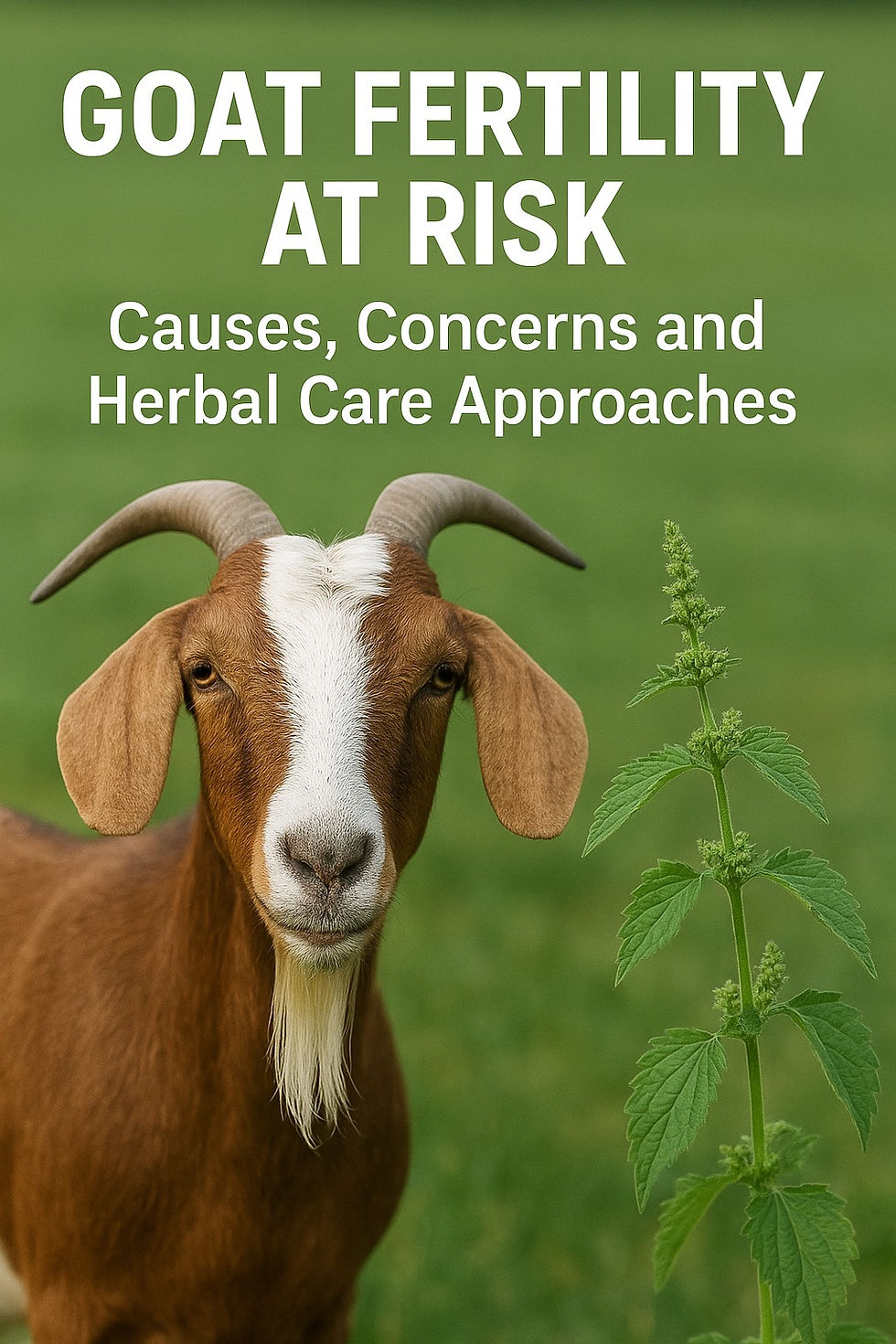
Goat Fertility at Risk: Causes, Concerns and Herbal Care Approaches
- TGT GLOBAL Development services
- Jan 8
- 2 min read

Goat farming is a vital livelihood activity for millions of smallholder farmers, providing milk, meat and income security. However, a growing concern in recent years has been the rise of infertility problems in goats, which directly reduces productivity and profitability. While modern veterinary medicine offers solutions, many farmers are now turning to herbal and natural remedies that are affordable, accessible and sustainable.
Causes of Infertility in Goats: Infertility in goats can be caused by several factors, often linked to management practices, nutrition and health status:
1. Nutritional Deficiencies
· Lack of essential minerals like selenium, zinc, phosphorus and vitamins (A, E) affects reproductive health.
· Poor-quality fodder and imbalanced feed reduce fertility rates.
2. Infections and Diseases
· Reproductive tract infections, brucellosis and parasitic infestations can hinder conception.
· High worm load weakens overall health, impacting fertility.
3. Breeding Management Issues
· Inadequate buck-to-doe ratio, wrong timing of mating and use of old or infertile bucks.
· Failure to detect heat (estrus) in time.
4. Stress Factors
· Overcrowding, poor housing, heat stress and long transportation reduce reproductive efficiency.
5. Hormonal Imbalances
· Irregular estrus cycles or silent heat often linked to endocrine disturbances.
Concerns for Farmers: Infertility in goats is more than a veterinary problem—it is a livelihood threat for farmers:
Reduced Kidding Rates: Fewer kids per doe means lower returns.
Increased Maintenance Cost: Farmers spend resources feeding non-productive animals.
Loss of Genetic Potential: Valuable breeding stock may become unproductive.
Economic Losses: Infertility reduces the overall profitability of goat farming.
Herbal Care Approaches for Infertility: Traditional herbal medicine has long been used by rural communities to support livestock fertility. These remedies are cost-effective, locally available and often free from side effects when used correctly. Some effective herbal approaches include:
· Ashwagandha (Withania somnifera): Acts as a reproductive tonic, improves vitality and fertility in both bucks and does.
· Shatavari (Asparagus racemosus): Enhances ovarian function, regulates estrus cycles and boosts conception rates.
· Fenugreek (Trigonella foenum-graecum): Improves hormonal balance and stimulates reproductive health.
· Garlic (Allium sativum): Enhances immunity and reduces reproductive tract infections.
· Moringa Leaves (Moringa oleifera): Rich in minerals and vitamins that improve overall reproductive performance.
· Aloe Vera (Aloe barbadensis): Traditionally used for uterine health and clearing reproductive tract infections.
· Mineral-Herbal Mixtures: Herbal supplements fortified with minerals like zinc, copper and selenium help restore fertility naturally.
Management Practices Alongside Herbal Care
Provide balanced feed with green fodder, concentrates and mineral mixtures.
Maintain hygienic housing and reduce stress factors.
Regular deworming and vaccination to prevent infections.
Monitor heat cycles carefully and ensure timely mating.
Use herbal supplements as preventive and supportive care, not just as treatment.
Infertility in goats is a growing concern with serious implications for rural livelihoods and food security. While modern veterinary interventions are important, herbal remedies combined with good management practices offer a sustainable, low-cost and farmer-friendly approach. By adopting natural solutions like Ashwagandha, Shatavari, Moringa and garlic, farmers can restore fertility, improve productivity and secure their economic well-being—while keeping their goats healthier, naturally. A concept of Herbal Garden @ Home will be highly helpful to make available ingredients in hands reach.



Comments