
Green Livelihoods: Climate-Smart Pathways to Rural Economic Security
- TGT GLOBAL Development services
- Sep 5, 2025
- 3 min read

As India faces rising temperatures, erratic rainfall and depleting natural resources, rural livelihoods — deeply intertwined with nature — stand at a crossroads. Traditional farming and allied activities are increasingly vulnerable, but amidst this uncertainty, a promising solution is gaining ground: green livelihoods. These are sustainable, eco-friendly income-generating activities that not only enhance rural economic security but also promote environmental stewardship and climate resilience.
Why Green Livelihoods Matter: In rural India, where over 64% of the population depends on agriculture and natural resources, climate change is not a distant threat — it's a daily reality. From crop failures and livestock loss to water scarcity and degraded soil, climate impacts are eroding income sources. Green livelihoods offer a two-fold solution:
Protecting and restoring ecosystems
Creating sustainable income for rural households
Key Climate-Smart Livelihood Pathways:
Agroecological Farming: Practices like organic farming, mixed cropping and use of biofertilizers reduce carbon footprints, enhance soil health and lower dependence on chemical inputs. In states like Sikkim and Andhra Pradesh, community-led agroecology has improved both productivity and incomes.
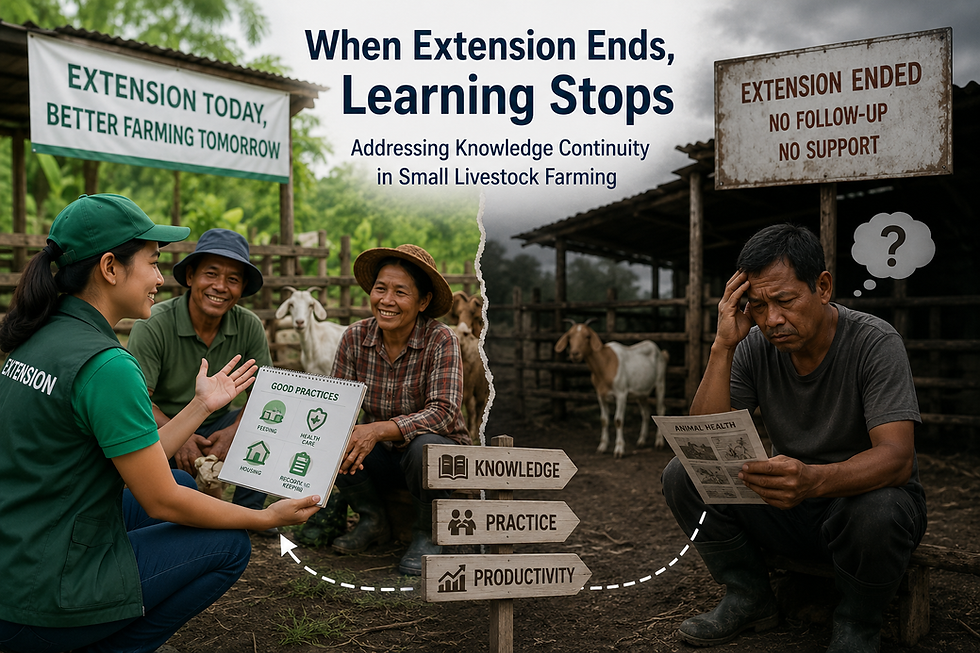
Sustainable Livestock Rearing: Small livestock, such as goats and backyard poultry, emit less greenhouse gas than large ruminants and adapt better to climate variability. When integrated with rotational grazing, fodder cultivation and veterinary support, these systems become climate-smart and income-secure.
Water-Conserving Technologies: Drip irrigation, farm ponds and rainwater harvesting are empowering farmers to grow more with less water. In Bundelkhand and Marathwada, these interventions have reduced crop failure risk and expanded off-season farming potential.
Agroforestry and Silvopasture: Integrating trees with crops and animals diversifies incomes while improving microclimates, sequestering carbon and preventing soil erosion. Neem, moringa and bamboo are among the popular choices offering ecological and economic returns.
Eco-Based Enterprises: Non-timber forest produce (NTFP) collection and value-addition—like tamarind, honey, lac and medicinal plants—provide green income for tribal and forest-dependent communities. Training and market access further enhance these livelihood chains. Some needs processing and some as cash crop like pluck and sale
Renewable Energy Micro-Enterprises: Solar-powered pumps, biogas units and decentralized energy grids are opening new avenues for rural youth and women to become energy entrepreneurs, mechanics and service providers.
Empowering the Rural Workforce: Women and youth are at the center of this transition. Women-led self-help groups (SHGs) are managing solar dryers, producing organic inputs and running eco-tourism ventures. Green livelihoods are proving inclusive and accessible — requiring lower capital, smaller land holdings and community participation.
Pashu Sakhis (community animal health workers), Jal Sakhis (water champions) and Van Dhan Kendras (tribal forest produce hubs) are emerging as grassroots institutions driving this change.
Challenges in Scaling Green Livelihoods: Despite proven benefits, barriers to scaling remain:
Lack of awareness and training on climate-smart practices
Inadequate access to green finance and insurance
Weak market linkages for eco-products
Fragmented institutional support across sectors
Addressing these requires convergence of schemes, public-private partnerships and investment in rural green infrastructure. Initiatives like MGNREGA, National Mission on Sustainable Agriculture (NMSA) and Climate Resilient Agriculture programs must align with livelihood strategies.
The Way Forward: Building Green Rural Economies: Green livelihoods are not a luxury — they are a necessity for survival and progress in a climate-affected world. They represent a powerful intersection of climate action, poverty reduction and rural development.
Investing in climate-smart livelihood pathways is an investment in India's future:
It reduces rural distress and migration
Enhances food and income security
Strengthens natural ecosystems
Supports India’s Net Zero and SDG goals
Green livelihoods offer a hopeful path forward for rural India. They put people and planet at the center of development and move beyond extractive practices toward regenerative futures. With the right policies, partnerships and grassroots leadership, climate-smart rural economies can become the backbone of a sustainable India and attain set sustainable gaols.



Comments