
Pashu Sakhi 2.0: A Roadmap to Strengthen India’s Grassroots Animal Health Workers

Updated: Aug 26, 2025
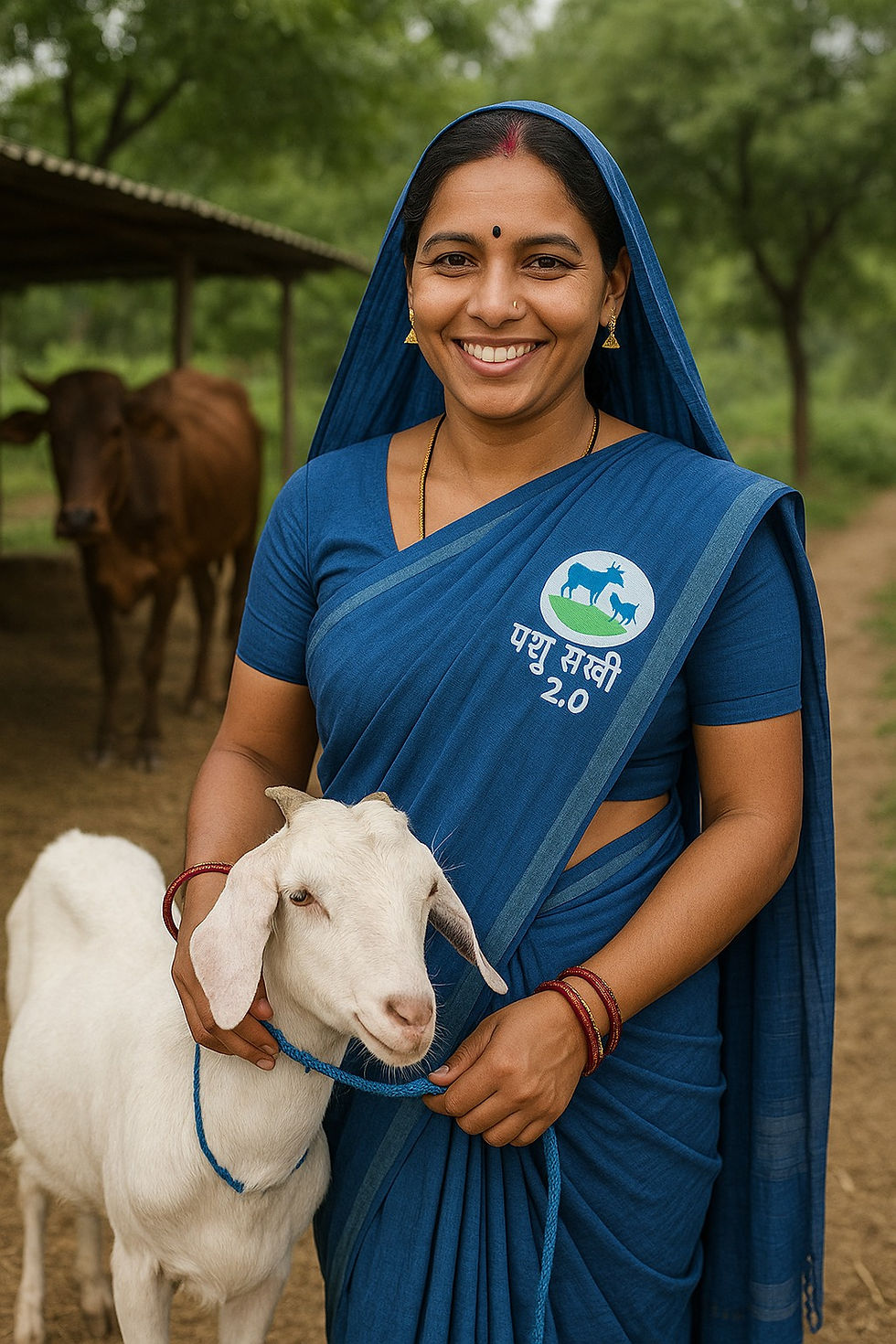
In the evolving landscape of rural development and livestock-based livelihoods in India, the Pashu Sakhi program has emerged as a cornerstone for decentralized animal health services. These community-based livestock caregivers—mostly rural women—are playing a silent yet powerful role in ensuring last-mile veterinary care services, animal husbandry awareness and improved productivity for small and marginal farmers.
However, as the sector grows and faces newer challenges—from zoonotic diseases to climate stress—there is a pressing need to reimagine the program. It’s time for “Pashu Sakhi 2.0”—a strengthened, scalable and sustainable version of the original concept.
Pashu Sakhis are trained para-veterinarians or livestock resource persons, often selected from within Self-Help Groups (SHGs). They are equipped with basic training in:
Vaccination, deworming and minor first aid
Nutrition and fodder advice
Breeding and animal management
Record-keeping and community awareness
These women not only serve as caregivers but also as catalysts of social change by promoting women’s leadership and income generation through livestock-based enterprises.
Current Gaps and Challenges: Despite the successes, the Pashu Sakhi model is facing several structural and operational limitations:
Lack of formal recognition from veterinary departments or state livestock policies.
Inadequate training duration and depth, especially for disease identification and treatment.
Limited access to tools and medicine kits, affecting service quality.
Minimal financial compensation or business incentives, making long-term engagement difficult.
Weak linkages with veterinary institutions, leading to isolation in complex disease outbreaks.
Key Pillars for Pashu Sakhi 2.0: To truly empower Pashu Sakhis and create a resilient livestock care system, the following steps can be part of the roadmap for Pashu Sakhi 2.0:
1. Certification and Policy Integration
Develop a nationally recognized training curriculum under the Skill India Mission or NSDC.
Integrate Pashu Sakhis into state veterinary services, livestock extension programs and digital livestock platforms.
2. Strengthened Training & Digital Upskilling
Upgrade the existing modules to include digital record-keeping, disease surveillance, AI use and basic epidemiology.
Facilitate hybrid training models (online + field), especially for continuing education.
3. Entrepreneurial Enablement
Promote livestock-based microenterprises (goatery, poultry, fodder production) linked to the Pashu Sakhi's services.
Enable access to microcredit, veterinary supply chains and market linkages.
4. Performance-Based Incentives
Move towards a fee-for-service or incentive-based model supported by government schemes or CSR partners.
Introduce performance tracking systems to reward effective service delivery.
5. Tech and Data Integration
Equip Pashu Sakhis with mobile apps for animal health monitoring, digital advisory and disease alert systems.
Link community animal health data to district-level veterinary dashboards for improved decision-making.
A future-ready Pashu Sakhi program is not just about animal care—it’s about empowering women, improving rural incomes and ensuring animal welfare at the grassroots. With the right mix of training, recognition, tools and technology, Pashu Sakhis can evolve into a powerful workforce contributing to One Health, climate resilience and rural development goals.
As India aims to double farmers' incomes “Lakhpati Didi“and build self-reliant villages, Pashu Sakhi 2.0 as next version must be placed at the heart of livestock sector strategies.


Comments