
Policy Gaps and Pasturelands: Small Livestock Farming in NE India's Development Plans
- TGT GLOBAL Development services
- Jan 6
- 3 min read

Updated: Jan 7
The North Eastern (NE) region of India—home to rich biodiversity, tribal communities and traditional livestock rearing practices—holds immense potential for small livestock farming, particularly goats, sheep, backyard poultry and pigs. Despite its strategic importance in rural livelihoods and nutrition, this sector continues to face serious structural challenges rooted in policy neglect, infrastructural gaps and misaligned development priorities.
In NE India, small livestock is more than just an asset—it’s a way of life. For thousands of tribal and marginal farmers, especially women, goats and hens are easy-to-manage sources of income, food and emergency liquidity. In states like Nagaland, Assam and Meghalaya, over 60% of rural households rear some form of livestock.
Yet, this vital sector remains overshadowed by crop-centric policies and lacks a focused, region-specific developmental blueprint.
Key Policy Gaps
Neglect in State Livestock Policies: Most NE states lack dedicated livestock development missions tailored to the hilly terrains, community land structures and indigenous breeds. Livestock components are often embedded weakly within broader agriculture or rural development policies, leading to fragmented implementation.
Pastureland and Fodder Crisis: Due to forest encroachments, shifting cultivation (jhum) and expanding urbanization, traditional grazing areas have shrunk drastically. In many districts, especially in hill states, there is no official demarcation of community pasture land and no schemes for fodder development in marginal lands.
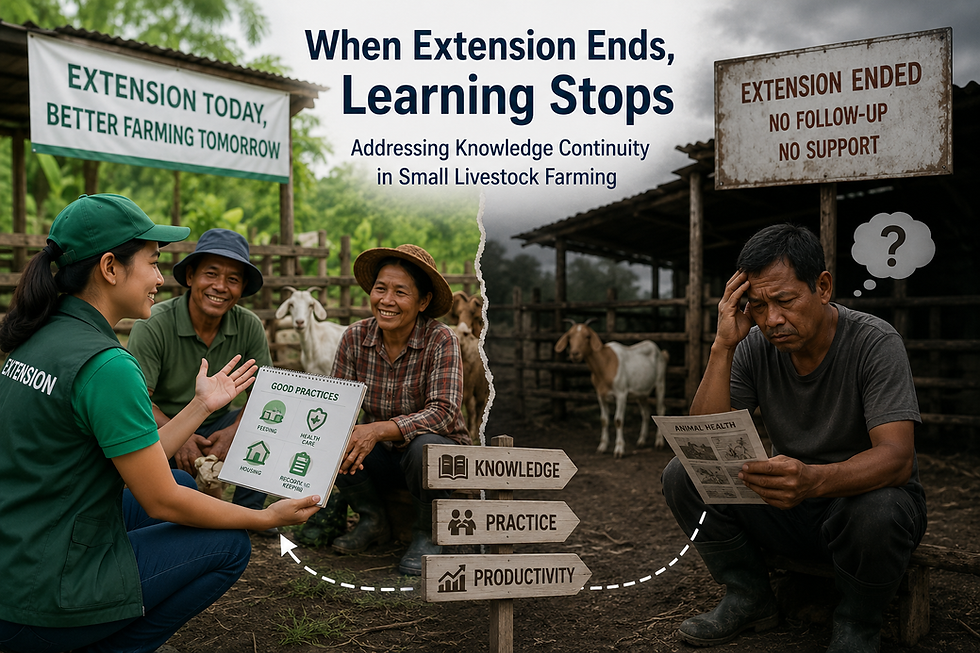
Limited Extension Services: Access to veterinary services, breed improvement programs and fodder advisory systems is scarce in remote rural areas. The number of trained livestock field functionaries (e.g., Pashu Sakhis, para-vets) is grossly inadequate.
Poor Market Integration: Smallholders in NE India often struggle to access organized markets for livestock and poultry products. Lack of local aggregation, value addition units and cold chains reduces farm-gate prices and weakens economic incentives.
Untapped Potential of the Region
Indigenous Breeds: NE India is home to unique and climate-resilient breeds like the Niang Megha pig, Assam Hill goat and local scavenging hens—ideal for low-input systems.
Gender Equity: Over 70% of small livestock rearers are women, offering an ideal opportunity for inclusive rural development.
Climate Compatibility: Small livestock farming emits lower greenhouse gases compared to large ruminants, aligning with climate-resilient agricultural goals.
The Way Forward: Bridging the Gaps
State-Specific Livestock Missions: NE states need livestock-specific missions under broader rural development or agriculture departments. These missions must focus on indigenous breeds, community-led fodder development and decentralized health services.
Recognize and Restore Pasturelands: Policies should mandate clear mapping and protection of community pasturelands. Integration with MNREGA for pasture development, silvopasture promotion and fodder seed banks can help restore the natural base of small livestock farming.
Strengthen Community Institutions: Investing in community-based organizations like SHGs, FPOs and women-led livestock collectives can ensure more effective input delivery, insurance penetration and market linkage.
Promote Integrated Farming Models: Programs must encourage livestock-agriculture integration (e.g., goats in agroforestry, poultry in kitchen gardens) to maximize land use and improve nutritional outcomes.
Small livestock farming in NE India can act as a cornerstone for rural economic growth, women's empowerment and food security. However, realizing this potential requires a paradigm shift in policy—one that values the region’s unique ecological, cultural and economic context. Filling the current policy gaps, securing pasturelands and designing inclusive, location-specific interventions is not just beneficial—it’s essential for a sustainable rural future in NE India.


Comments