
Silent Threat: How Antibiotic Overuse in Goats and Sheep Endangers Human Health

Across the globe, small livestock like goats and sheep plays a vital role in rural livelihoods and countries economy, providing milk, meat, fiber and financial security to millions of families. To safeguard these valuable assets, antibiotics are often used to prevent or treat diseases. However, excessive and indiscriminate use of antibiotics in goats and sheep is silently creating a major public health crisis — antimicrobial resistance (AMR). This “silent threat” travels from farmyards to households, posing risks not only to animal health but also to human well-being.
Why Are Antibiotics Overused in Small Livestock?
Preventive Practices: Farmers sometimes use antibiotics as a “safeguard” against potential infections, even when animals are healthy.
Growth Promotion: In some regions, antibiotics are added to feed to speed up growth and weight gain.
Lack of Veterinary Oversight: Easy access to over-the-counter antibiotics and limited veterinary services encourage self-prescription by farmers.
Economic Pressure: Quick fixes with antibiotics seem cheaper than long-term solutions like improved housing, vaccination and biosecurity.
Pathways of Risk to Humans
Residues in Food Products: Improper withdrawal periods mean antibiotic residues can remain in goat milk, mutton and other animal products consumed by people.
Antimicrobial Resistance (AMR): Over time, bacteria in livestock become resistant to commonly used drugs. These resistant bacteria can transfer to humans through food, direct contact or the environment.
Environmental Contamination: Manure from treated animals spreads resistant bacteria into soil and water, creating a wider ecological risk.
Human Health Implications
Reduced Treatment Options: Resistant infections in humans make common antibiotics less effective, forcing doctors to use stronger, costlier and sometimes more toxic drugs.
Rising Healthcare Costs: AMR increases the length of hospital stays and overall medical expenses.
Global Health Security Threat: WHO warns that AMR could cause more deaths than cancer by 2050 if unchecked.
Towards Responsible Use
Awareness & Training for Farmers: Educating goat and sheep farmers on judicious antibiotic use, withdrawal periods and alternatives.
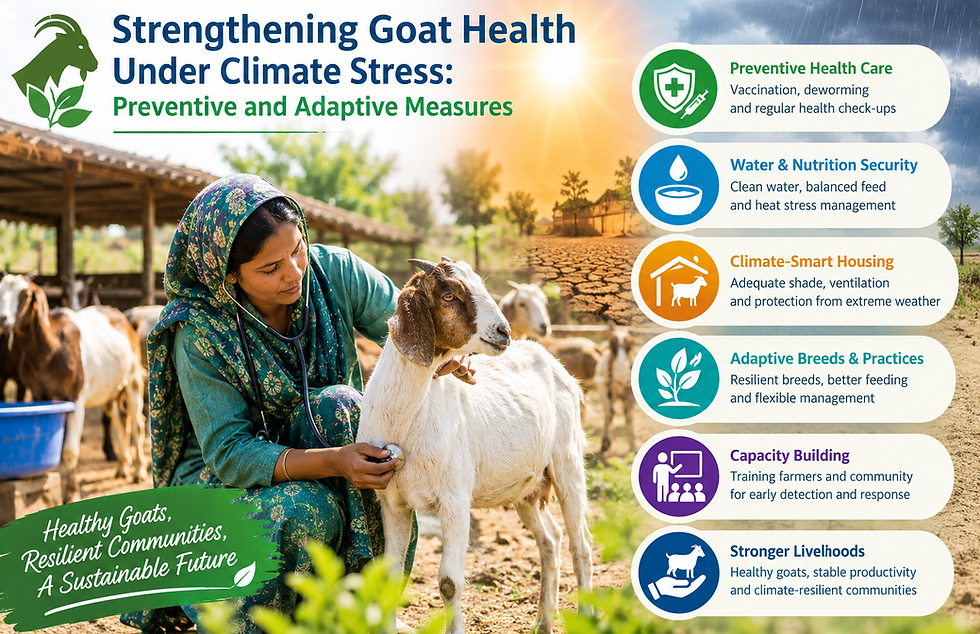
Preventive Healthcare in Animals: Promoting vaccination, deworming, good nutrition and hygiene to reduce disease incidence.
Veterinary-Led Prescription: Ensuring antibiotics are used only under veterinary supervision.
Strengthening Policies: Implementing national guidelines to regulate antibiotic use in small livestock production.
Community Engagement: Linking human health workers with livestock extension workers to address the “One Health” challenge collectively.
The overuse of antibiotics in goats and sheep may seem like a minor farming practice, but its ripple effects are enormous. It silently fuels the spread of drug-resistant bacteria, threatening both human and animal health. By promoting responsible practices and recognizing the shared responsibility under the One Health approach, we can safeguard the future of livestock farming and protect human communities from a looming public health crisis.


Comments